Friday, March 1, 2013


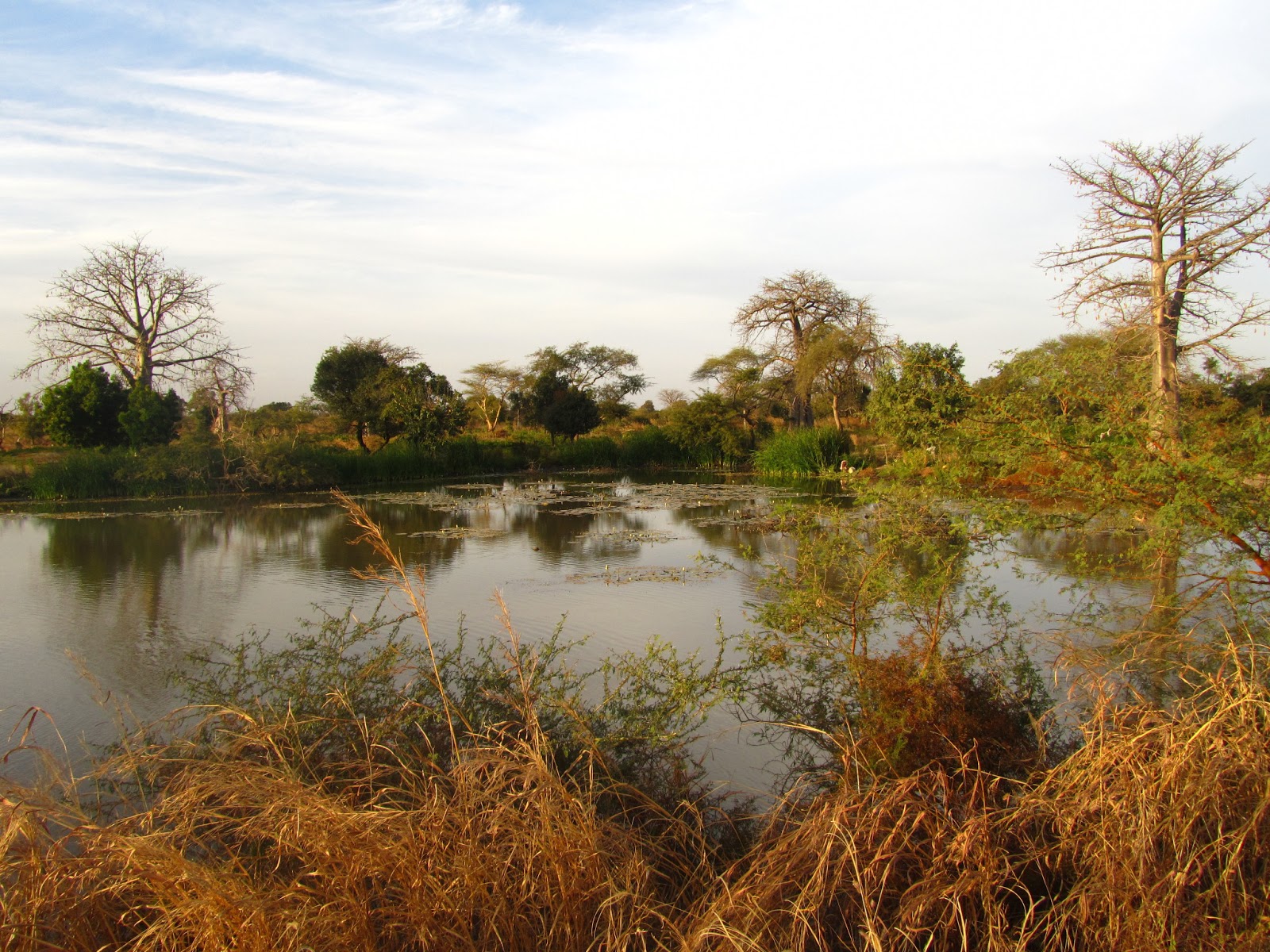
I recently had my first visitor here in Senegal, allowing me to explore more of Senegal with a laid-back, fun, adventurous partner. Over 12 days we had a whirl wind of a trip- exploring Dakar, going to my village, Tambacounda, Thies, the Gambia river, Toubacouta (a gorgeous town next to mangrove lagoons) and Lampoul (a picturesque touristy desert spot).
Myself and Anabel (a fellow Berkeley grad who I met when we studied abroad in Ghana together and due to fate we lived next door to each other the following year)

The only downside of the trip was that I feel like I have spent enough time sitting in transportation to last a lifetime. One of the more ridiculous days involved riding on an ‘Alhum’, sept-place, taxi, bush taxi, back of a truck, snowboard and camel. Eight modes of transport in a period of 16 hours- you couldn't pay for that type of adventure in the US!
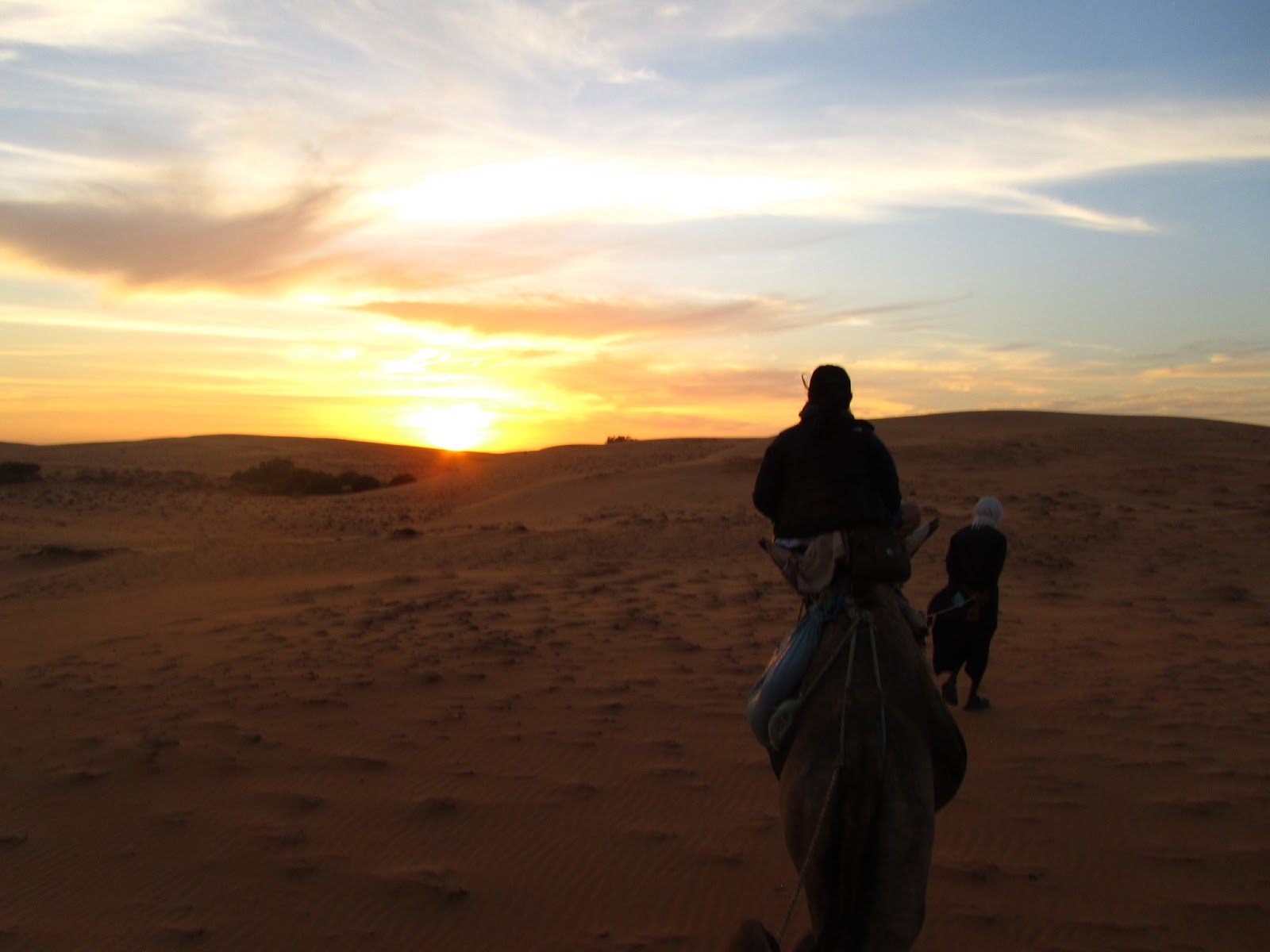


I think we really only had one low point-when the car that we were jammed in for 4 hours (dehydrated and starving) had cockroaches swarming the floor. Anabel became an expert roach killer while I tried to focus on not getting a concussion from my head hitting the roof of the car. The high point for me is a tie between our pirogue boat journey in Toubacouta where we watched over 100 birds flock home as the sun was setting and our camel ride during which we watched the sunset and the full moon rise over the sand dunes. Not too shabby.


But overall it was a well worthwhile trip (for me and I think for Anabel as well ;). Getting to show off my village to a person who knows me was a special experience. I am so of how much I have learned and changed over the past year! Just watching Anabel struggle to eat rice with her hand while I expertly licked the particles of rice and sauce from my fingers made me realize how far I have come. It is also refreshing to translate for others and remind people in my village how far my language has come- there was once a point when I too could barely spit out 5 words and did not know how to greet! But Anabel within no time Anabel was a pro, she was ecstatic to take on a new name- Oumu- and felt quite connected to her namesake whom we helped pull water at the garden and made lame attempts at pounding grain for her. I wish we could have spent more time in Soucoto as with 4 solid days there she would have had the greetings down, impressing everyone.
I have to admit tho- translating for another person for 2 weeks is exhausting, especially as I was working through speaking Jaxanke, Mandinka, Pulaar, Wolof, French, and English. My proudest moments involved haggling in Dakar making sure she got the lowest prices on souvenirs- and Id say we did pretty darn well.
Got to pet 10 month old lions at a Park Reserve! Pretty cool, their tails and paws especially felt cool!
Being a tourist here was a nice break from my day to day life- which I am eager to jump back into before I leave for my next journey, a trip to the East Coast! 
But cant wait for my next visitors to share my experiences and to explore all that Senegal has to offer! So Bismillah everyone!

Saturday, January 19, 2013

Eating to live- Senegalese Village Diet

I just realized I have yet to write a blog on the thing that I think about the most- FOOOOOODD!!! obviously....So I am going to try to give you all a run down on the typical Senegalese village diet and table manners, or should I say dirt manners?
First off I will give you a summary village meals. Lunch is always plain rice with peanut sauce. The sauce is made by boiling water, then adding peanut butter to it. A special stick is used to stir this mixture which makes it boil up and become fluffier. Spices, pounded onion, pepper and occasionally dried fish (gross) or small bits of meat are added for flavor. In general this sauce, mafee, is not bad it is just becomes kinda drab when you eat it every day.
My favorite sauce
There are two dinner options for me. One is a couscous that is made either or millet or corn with a sauce served over it. My favorite is when there is couscous with a leaf sauce that is made by boiling leaves, and then adding spice and ground peanuts (right now squash is also added giving me a real vegtable!). My other dinner option is boiled corn that turns into a kind of mush and then has either a peanut or leafy sauce in the middle. When I first got here I could not stomach any of the mush but now, I have gotten used to it... Never thought I would say that.
For special events cheeb is cooked. This is rice that is cooked with oil and spices. Then a few veggies are fried up to serve on top and if you are lucky, fish is fried and put on top as well. I do not particularly like cheeb as it just means oily rice, no sauce, and in my case only a small bite of fried cassava, but other volunteers eat cheeb everyday for lunch and see a pile of veggies in the center. I only saw that many veggies for Tabaski, the biggest holiday of the year.
Something I find particularly cool is that for the first time in my life I am completely eating seasonally. For instance, I had never seen a squash here until about a month ago when there was a massive harvest in my village and now I get a bite of squash everyday. Squash is usually boiled or fried and is a delicious addition. Before squash it was okra, and before bitter tomato and before that it was... humm I forget!
Plato-y food, when the sauce is good I can handle it!
Much to my mother and grandmother's chagrin, but to my pleasure, I eat with my hands here!! Myself and 8 other women crowd around one bowl for meals, using only our right hand to scoop out rice from the portion of the bowl directly in front of us. To get the sauce you kinda pull some of the sauce from the center to the rice, roll it in your hand for a bit, then those it in your mouth, licking off the remainder of the sauce. If I did not look attractive when eating before I came to this country, there is no WAY I look anything less than hideous now.
Lastly, I want to clarify that what I eat is totally different from Anna, who is a mere 10 km away from me, and is completely different from what someone would eat 70 km away in Tamba. Every village is different and every family is different. I recently discovered that my family's food is especially poor and there are other compounds in my village that eat more fish, meat, veggies etc... Yes, I have been using this knowledge to my advantage and eating food at other homes :)
People love it when I eat at their home. The funny part is that I am always given my own bowl, as I am a special guest, and then brought in a room to eat alone. Either that or a few people will awkwardly watch me eat by myself as they wait for their bowl. I compare this to having a visitor in the states, sitting them in front of the table as the rest of the house goes and watches TV. Weird right? Gotta love culture! 


While I sure do miss American food and find myself dreaming (literally) about salad bars, multigrain bread, Mexican food, asparagas and shrimp...ok i need to stop making this list...I have found that because I often have no choice of what I am eating, I have learned how to eat to live, not live to eat, which is something that us Americans love to do.
With that said, every time I go into Tamba I shove myself with goodies and treats and delicious care packages that you all have provided me. Sooooo I have definitely not made it a rule for myself but it is an interesting thing to think about and man am I excited to not eat rice ever again!!!!!!!
My favorite baby!! Aminata, isnt she adorable! And yes, very dirty :P


Friday, January 4, 2013

Rediscovering my Roots


Best picnic spot
In preparation for the 400 km bike ride over the preceding 6 days, I packed my backpack full of the necessities- one shirt, one tent, one skirt, one book, underwear, soap, and LOTS of snacks. Bits of all of you came with me- padded bike shorts from mom, map from dad, shirt from Deb, art tools from Jill, and goodies that were hungrily consumed from the rest of you. We all appreciated it sooo much and all of you were in my thoughts! 

Chrissie, Alicia and I sleepily departed the Tambacounda regional house on Christmas Eve morning with zero expectations. I desperately needed to get away from my region as I was going a little stir crazy after repeating the same routine for over 2 months. 

Our first clue of crossing over the border into a different country, and a former British colony, was when we saw a ‘Police’ car pass us on the road (instead of Gendarme) followed by children eagerly chasing our bikes and simultaneously shouting ‘Helloooo, How are you’. It was bizarre. I forgot how accustomed I have become to everyone speaking French! Greeting people in English and being able to negotiate prices in my native tongue was a whole different ball game that I never got used to.

Wassu Stone Circles
The other linguistic bonus for me was that the majority of the country is Mandinka, meaning I could finally use my language skills that I have been so diligently working on. This is something I can rarely do in Senegal as most people do not speak a Mande language. I had not expected this but I was getting a vacation away from Senegal. 

Contrary to its obscure geographic proximity (look at a map) and ethnic similarities, the differences did not end with the English language. Because of the size, colonial histories, current presidential situation, and more, the Gambia and Senegal are two very different countries. 

Ferry crossing, the man refused to accept money from us to pay for the ticket
Most of our days we took slowly, leisurely riding past ponds, tropical forests, swarms of birds and the adjacent river. We stopped in villages and asked for water when thirsty, ate next to picturesque landscape when hungry, and napped under the shade of trees when tired (although were often interrupted from these naps by herds of cows, curious children and concerned adults).


In total we biked over 430 kilometers although the time flew by due to the lax pace and good company- we impressively sang all of 100 bottles of beers on the wall, played 21 questions for hours and discussed everything from the validity of obscure cereal flavors to pigmy rituals.


The scenery, company and fresh air were enough to make a perfect trip but what was truly the icing on the cake were the people who we met on the way. While I do not know why, we collectively decided that Gambians are friendlier than Senegalese people, which was a touching reminder of why I returned to Africa for Peace Corps. I was thoroughly impressed by the kindness and generosity of Ghanaians and found Gambians to be just as warm.


After biking 3/4th of the country we decided to take an extra detour to visit James Island and Juffure, where the writer Alex Haley traced his African roots. Afterwards, he wrote a book titled “Roots” which became an American classic and made James Island a popular tourist attraction.


Visiting the Island was fascinating as there was a crumbling fort that thousands of slaves had been shipped out of and a group of American tourists who made themselves known by rudely shouting ‘can yall stop speaking The Gambian already!’.

But for me, the real adventure was the journey there. We took a horrible road off of the main highway to get down to Juffre which took us longer than expected. As the sun was setting we rolled into a small Wolof village and asked if we could pitch our tents and spend the night in someone’s compound. The prospect of making us sleep outside was appalling and we were quickly ushered to the chief’s home. Upon entering the compound, 65 adults and children alike surrounded us, unable to tear their eyes away. To entertain them we sung a round of ‘jingle bells’ that was an immediate hit and turned into a clapping and dancing fest. Afterwards we were brought to a massive room with a private bathroom that was our lodging for the night. Two families brought us food and were sad to see us go the following day.
James Island

Once in Juffre, we were reminded of the fact that we are white, rich, tourists and were constantly asked to give money for this and that, making me so frustrated that I was ready to leave without spending the night. But once again, our language skills changed the experience. As soon as we turned the conversation into Mandinka or Pulaar our skin color became inconsequential. We were offered a free place to stay, tea, and food that was pushed in our faces until we could no longer politely turn them down and were forced to oblige. 

The river at Georgetown, the previous Gambian captial
Without realizing it, I have become accustomed to people sharing everything with me, going out of their way to help me, and eagerly hanging onto every word that I say. Some days I become irritated by this all encompassing attention and just want to blend in and go places without being badgered by a million questions. Receiving genuine kindness and generosity from Gambians reminded me that this is a truly extraordinary experience and while it may be frustrating, the root of the matter is that people here are truly exceptional. 

Saturday, December 22, 2012

Happy Holidays!!

Made latkuhs in village, they were DELICIOUS and so easy! Will have to make them again, does not have to be during Hannukah!
 Missing all of you during the holiday season! Cant believe I have been gone for 9 months! Now that I have been here so long, I have become quite accoustomed to life and forget that there are so many things that have become normal to me, that would seem so bizarre and interesting to you! For instance- school, food, health, funerals, births, work, not work.... the list goes on and on. But alas, those blogs will have to wait til next time!

But here are some pictures I took during my last village stay to make up for my writing laziness. Happy Holidays, eat lots for me and hugs to all!

Gave some to Anna's family. They loved them!!

Nice pile of peanut plants.

My pregnant mother 'tiga suru suring'. Essentially wait for wind and pour the peanuts out while the leaves separate, blowing away.

Post lunch wrestling tournament. I joined in as well. Dont worry, i won.

Thursday, November 29, 2012

Peanuts here, peanuts there, peanuts EVERYWHERE!

Did you all know it is peanut harvesting season in Senegal?!?! Very exciting for me because it involves a new variety of snacks. My favorite is fresh , roasted peanuts. So fresh I first pull up the plant out of the ground, carry it home and give it to my sister who then gets some hot coals ready while I individually pull the peanuts off of the plant. Ever had peanuts that fresh? Delicious.

It is almost worth going to the fields for this perfect snack. Peanut farming is tough work!!!! The actual process pre-harvesting is long and extensive so I will save you from hearing about that until another time. But, if you are interested, here is what it takes once the plants are ready for harvesting. 

First, the woman have to  hire men (4 dollars a day) to 'tiga jaxuu' or go around with a hoe and dig around the plants, pulling up the roots. I tried to dig up one plant and was sweating sooo much, took me about 5 minutes while my mom does it in 30 seconds. But still, this is man's work so the woman have to hire men to do most of it.

I had 2 wonderful American university students from Dakar visit me and while they were here we helped with the next step of peanut farming- 'tiga nekelo' or the gathering of the plants into large piles. For them, it was an eye opening experience and were very impressed as I did all of the work, WHILE carrying a baby on my back. (I was impressed with myself as well.)

The next step is 'tiga tiumbo' where you comb through the dirt to pick up individual peanuts that had fallen off of the plant and are a individually hiding in the dirt. After 2 hours of this my neck was killing me from leaning over and preforming this tedious task. Following this, the smaller peanut plant piles are collected and placed into larger peanut plant piles. Then people hit the piles with sticks, making most of the shells fall off.

I am not totally sure what happens after this step... but I am guessing that is the point when the majority of the peanuts get brought back to the village on a donkey drawn cart. Once in village women wash the shells with water (tiga kuu), crack open the shells (tiga woto), toss the peanuts to separate the shell and the peanut (tigo tofe), sort through the peanuts for the bad vs. good ones, and FINALLY go to the market to sell them.

Sound exhausting? Think about that next time you snack on some peanuts while watching TV or eat a PB sandwich (oh dont even get me started on how many more steps it takes to make PB). But I must say, I am very glad I am in a peanut producing culture because at least I get some protein from them and can never be sick of eating too many peanutst!!

Sunday, November 4, 2012

Tabaski is to Muslims as Christmas is to Christians


Sheep lots are to Tabaski as Christmas tree lots are to Christmas

Tabaski (or Eid al-Adha) is one of the most important Islamic holidays when Muslims celebrate Abraham's willingness to sacrifice his son, Ishmael. Instead, Abraham slaughtered a sheep as a sacrifice to god. To commemorate this event, Senegalese kill sheep and eat the meat for the following few days.
A week prior to Tabaski I took a short trip to Thies and Dakar, not realizing the impact that Tabaski preparation has on Senegalese economy and daily routine. Fields on the side of the road that are typically empty were instead filled with Pulaar men and their herd of 20 or more sheep. Each man proudly stands next to their crop that they have tied together with a rope, making the sheep form a large, noisy circle. We passed by over ten of these 'lots', each with more sheep circles than the one before. Depending on the size, a sheep can go from 30 USD to over 300 USD. The bigger the sheep you buy, like bigger the tree, the more impressive and successful you appear to be.
I was taking a 'mini bus' back to my village, when we stopped to load on one of the passenger's cargo. And lo and behold, it was about 25 sheep that were loaded onto the top of the car and stuffed underneath our feet. At one point, to the chagrin of the owner, one of the badly tied sheep fell off the top. He survived. As I descended the car, I realized that I was covered in sheep hair. Lovely.

Chopping down Christmas trees are to Christmas as slaughtering sheep is to Tabaski

The morning of Tabaski I awoke to the sound of a beating drum, summoning the call to prayer. I dressed quickly as I did not want to miss any of the exciting events. I soon discovered that the only real thrilling thing that happens on Tabaski (like many big holidays) is cooking and eating. After helping cut onions for over an hour, I saw the men sharpening knives and knew what it meant. The killing had commenced!
In less than 10 minutes there were 7 dead sheep with their necks sliced open and blood splattering the dirt. The boys and men worked together to saw away at the sheep, placing meat pieces on random scraps of metal. The meat was the distributed to the woman to cook different parts in different shifts throughout the day. (oh and of course all this meat just sits out for the next two days with flies and other insects crawling on it. Everyone touches the raw meat and then eats without washing their hands. Needless to say my stomach was not very happy for the following few days.) I saw more meat consumed on this day than I have the entire time I have been in my village combined. 
The important female elders feasting over a massive bowl of meat

Going to the market is to Tabaski as going to the mall is to Black Friday

The other major aspect of Tabaski is getting new clothing. The only time for the entire year that most people get new clothing is for Tabaski. Most children received two new outfits, a pair of new shoes and new jewelery. In addition, all the girls had their hair done in fancy up-does, with yarn or hair extensions that go down their backs. Even a week prior to Tabaski, going to the market is insane, everyone is fighting over articles of clothing, bargaining for jewelery and trying to find the correct size of shoes. I was not brave enough to fight through the crowds and decided to buy bananas outside of the zoo rather than venture in.
My 6 year-old sister was so excited to put on her new outfit that before she even showered on Tabaski morning she demanded to put on her skirt-shirt combo. Sadly, the top was too small to fit over her head and after 5 of us tried to pull it over her, we gave up and the outfit was put on the 8 month old baby. So cute.


Baby Ami is wearing the oversized/undersized outfit, held by Naye.


The climax is to Tabaski as the climax is NOT to New Years

Bintu all dressed up, ready to go!
Unlike the kids, I was less excited to put on my outfit that I had gotten sewn for my Swearing in Ceremony. As pretty as it is, it is so hot and uncomfortable so I kept pushing it off until my mother wore her new outfit. 
After lunch she said she would not put it on until the next day when all the woman go to greet other families and surrounding villages. I too decided to put it off until morning. 
So the next day, I bravely put on my complet and prepared myself for an exhausting day of greetings. After gathering together with over 40 woman, all dressed in their new, fancy outfits, showing off their embroidery and new necklaces, we set out. On the short walk to Dialacotto I got many shouts from impressed villagers and had several head scarves thrown at my feet. (This means that my outfit was fancy and I was supposed to throw money onto it.) 
We arrived at a compound I had never been before and all 40 of us stuffed ourselves into their little room where an elderly, possibly blind woman, was sitting. After several rounds of greetings and prayers for the coming year we got up and left. I thought to myself, well that is not bad, went by fairly quickly. How many more people will we greet? I soon learned that that was it. We were headed back home. I could not believe it! We all got dressed up for that! All of you have been preparing for months for that! To greet one lady and then go home! 
I took off my already sweaty complet after having worn it for less than two hours. What an odd, uneventful event.

Saturday, November 3, 2012


Thanks to all of the amazing people who have sent me goodies, food, love, and letters! This is the corner of my room where I put up all of my letters! I look at them everyday and think of all of you! Thank you!

 I am sorry that it has been so long since my last post! Once again, time just goes by and before I know it- its November!! Since my last post many, (but really very few) things have happened. The most exciting of which is that two monitor lizards dug a hole through the outside of my latrine and into the pit and were living there. Google monitor lizards. They are disgusting. Too much info? Sorry.
My health hut has been functioning successfully and I hang out there most days. My baby sister no longer cries when she looks at my white skin so I now carry her everywhere on my back. I joke that I will also carry her to the States although who knows if its a joke.... ;)
 The corn is ready which allowed us to have delicious snacks of burned corn for a few weeks. Okra is also in season and I spend many hours carefully slicing buckets okra into tiny pieces with one of my mothers. It is then dried, pounded, sifted and cooked with peanut water. Cooking here has a few more steps than in the states...
Halloween passed by for all of you, and i had an even more important holiday that involved  killing many sheep....