Sunday, January 26, 2014

Dienaba's story

There are some stories that really stick with me. Like life anywhere most days now quickly slip by with nothing new for me to think of. My life in Senegal has become quite ‘normal’. But occasionally, there are stories that rise above the others, stories and people that I will think about daily when I return to the US in May.
One of these stories is Dienaba’s. Her strength and courage continues to astonish me and make me question myself. I hope you find it equally compelling.  

I first met Dienaba when I was interviewing the 8 winners of the Michelle Sylvester Scholarship at the Middle School in Dialacoto. She was similar to the rest of the girls, rather timid, spoke elementary French and was nervous to speak to me. After the completion of the program and the school year, I continued to get calls from her, at first not realizing who it was. When she continued to call merely to greet me I became suspicious. This is common here (especially from men who want to marry you), Senegalese calling incessantly, just to say hello but eventually asking for money.

Dienaba never asked for anything, she would call at least once a day, ask where I was and showed up at my door a few times. She would even sweep my room, insisting that it was dirty and she wanted to clean it. One of these times it was very early when she arrived. She was very clearly upset, and rapidly said some things in Jahanke that I did not understand and left.

Much to my dismay, I did not understand what was going on and her calls began to stop. I am embarrassed to admit I was grateful for the lessening up of contact as my suspicions that she wanted money or something from me remained.

At the start of the school year, thanks to the Michelle Sylvester Scholarship and many of your donations, I paid her school fees and in doing so the school administrator explained something to me. Dienaba’s parents had forced her into a marriage that she did not want to commit to. She continued to refuse until her only option was that she ran away. In doing so, she isolated herself, deserting the only family and community that she knew. She went to the police, to report her situation.

Everyday in Senegal, girls as young as fourteen marry men twice, three times their age. But, this is no longer socially acceptable everywhere. There are many efforts demeaning early marriage, promoting awareness for girls education and later marriage. I am proud to say that in my village, while many young girls are ‘promised’ to older men, they rarely get married until after they finish Middle School or they are at least seventeen. Additionally, there are government laws against these forced marriages. Dienaba is just one example.

With the police, she took her parents to the courts in Tambacounda. There is a specific Judicial branch, dealing with child cases, and from there she won her freedom, but also her seclusion.
Now she has no contact with her family, her brothers and sisters, her uncle that she had lived with during the school year, none of them communicate with her. She lives at the police station in Dialacoto. No longer having a home but a public, temporary living space, shared with several Wolof men and a woman who is hired there to clean. When I went to see her at her new home she was overjoyed to have a friend visit. Naively, most will not come for fear of the police arresting them. She seemed more determined than ever to continue her study, but sad that she has broken so many ties in order to fulfill this basic human right.
My reason for telling you this story is not to further the stereotypes of ‘gender struggles’ in Africa. I am not telling you to go donate money to NGOs supporting girl’s rights nor to send money to Dienaba.
Rather, I want to explain that slowly slowly, girls here are fighting back. With or without outside intervention. Here, the system put in place by the Senegalese government worked! The police stepped up, the judicial system supported her, teachers at the Middle School gave her pens and books, I paid the 14 dollars for her school fees and now, she has been taken in as his own daughter by the Chief of Police in Dialacoto. Because of help from her community, she will finish Middle School, and hopefully be one of the rare girls that continues to High School.

Dienaba is one of the lucky ones, her story may be rare now, but I have faith that come ten years it will become one among many. 

Monday, November 4, 2013

Crops to Cows

I recently went to visit a friend in the North of Senegal and discovered that in reality I know very little about Senegal. I consider myself an expert on my community, peanuts, Jahanke culture, malaria and more; but none of these are prevalent in the North.

I knew I was out of my element on the 350 kilometer drive up when I could not communicate in Jahanke with one person. After a nap, I woke up to the landscape of a different country. At first I thought that the window was dirty but soon realized that this just means I made it to the Sahara. All of the corn stalks looked like a dull shade of green and the ground was a different shade of brown. Unlike my area with rich soil, everything was sand. My beautiful trees were replaced with torn ridden bushes and invasive Mauritanian plants. Huts that are ubiquitous in my area are turned into cement rooms with tin roofs or large mud built structures.

One of the biggest surprises for me was that the there are barely any crops. Coming from a village where everyone above the age of 18 has at least one field, I was shocked. Therefore, instead of spending all of their time planting, farming and preparing peanuts, people in the North have a lot more time on their hands. Their main time occupant is taking care of cows and praying. My village has cows but we leave them in the fields meaning I could go months without seeing one. The north is filled with people of the Pulaar ethnic group who are traditionally known as herders. And let me tell you, they love their cows.

In my friend Alecia’s compound, there are 30 grown cows and 10 babies. Every day a man is paid to take the cows out to the ‘bush’. Additionally, they herd goats and sheep which seemed silly to me until I realized that this is the only way for them to find water and food. I got the chance to milk a cow, drink fresh milk, and a fancy sour milk drink. Minus the milking a cow part I was very glad to not be part of this cow culture. Most of my meals contain peanut basis while Alecia’s contain milk. We grow our own corn while they buy imported corn from Canada. Her dad goes to the Western Union in her 'village' to get money every month from his sons who live in France, Spain and America. My family works for 5 months to grown peanuts and than spends 7 months cracking and selling them.

Another contrast is religion. In my area Jahankes are known for being very religious and the Pulaars are less strict. Often they dont fast during Ramadan and do not pray 5 times a day. All of Alecia's family fasted during Ramadan, they killed 3 sheep for Tabaski, and they plan out their days around the 5 times of prayer. My family is somewhere in between. We fast during Ramadan and pray a lot then but are less strict about praying 5 times a day. Mostly, I deduced that it is because we are busier. Our average day consists of more things to do. We pull water, instead of just turning on a spigot. We pound our corn instead of bringing it to be ground buy a machine. 
The first mosque in Alecia's village right next to her hut. Another one is being built. 

Overall it was interesting to see an new part of Senegal that I did not realize exists. This is a tiny country (the size of Oregon) but because transport is so slow it feels much bigger. Now that the count down for my time here has begun I need to see these other corners of Senegal! 

Saturday, October 19, 2013

Leaders in Development Program

Most of you are probably thinking, ‘ok so Janet has fasted, learned some language, eaten some gross food, but worked?!”. Well for the most part, you are correct. Work has been slim. BUT I am happy to say that I have very successfully implemented an internship program in Tambacounda, the large city 70 km from my site.

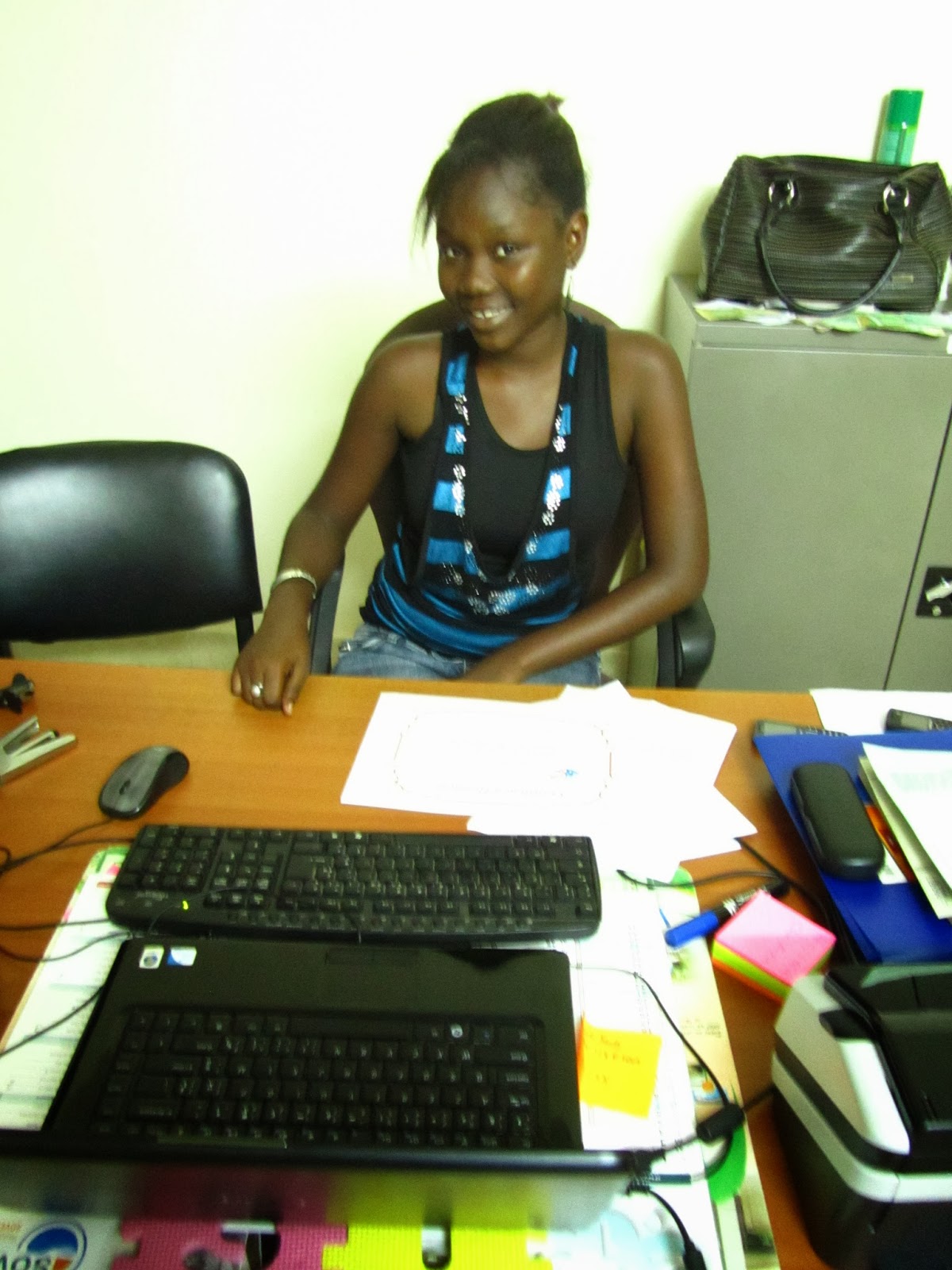
Unlike doing this sort of thing in the US where people beg for interns and all communication occurs online, this was a long, difficult process that took over 10 trips to some of these offices, JUST to get them to accept an intern. It was tough, annoying work but good practice for my French and an interesting experience as the people who work in offices are completely different from the people I typically interact with in my village. Because of this program, I have been able to meet a man who spent the past 15 years living in Atlanta and Brooklyn, a woman from the Central Republic of Congo who is getting her PhD from Clarke University, another gentleman who travels to France three times a year on business and owns 2 homes, the list of interesting people goes on and on. It has been so refreshing to realize that intellectual intelligence does exist in Senegal, but it is something I have not been exposed when living in village.

While I was somewhat expecting to meet these types of impressive individuals at offices, I was unprepared for how intelligent the students would be, and let me say it is a pleasant surprise. These students were asking us what we thought about Syria, American global dominance, Senegalese gender relations and our lives in America. Since most of my interaction with Senegalese involves me reiterating that no, I am not married yet and no, I do not eat 'Cheeb' in America, I was both astonished and refreshed.

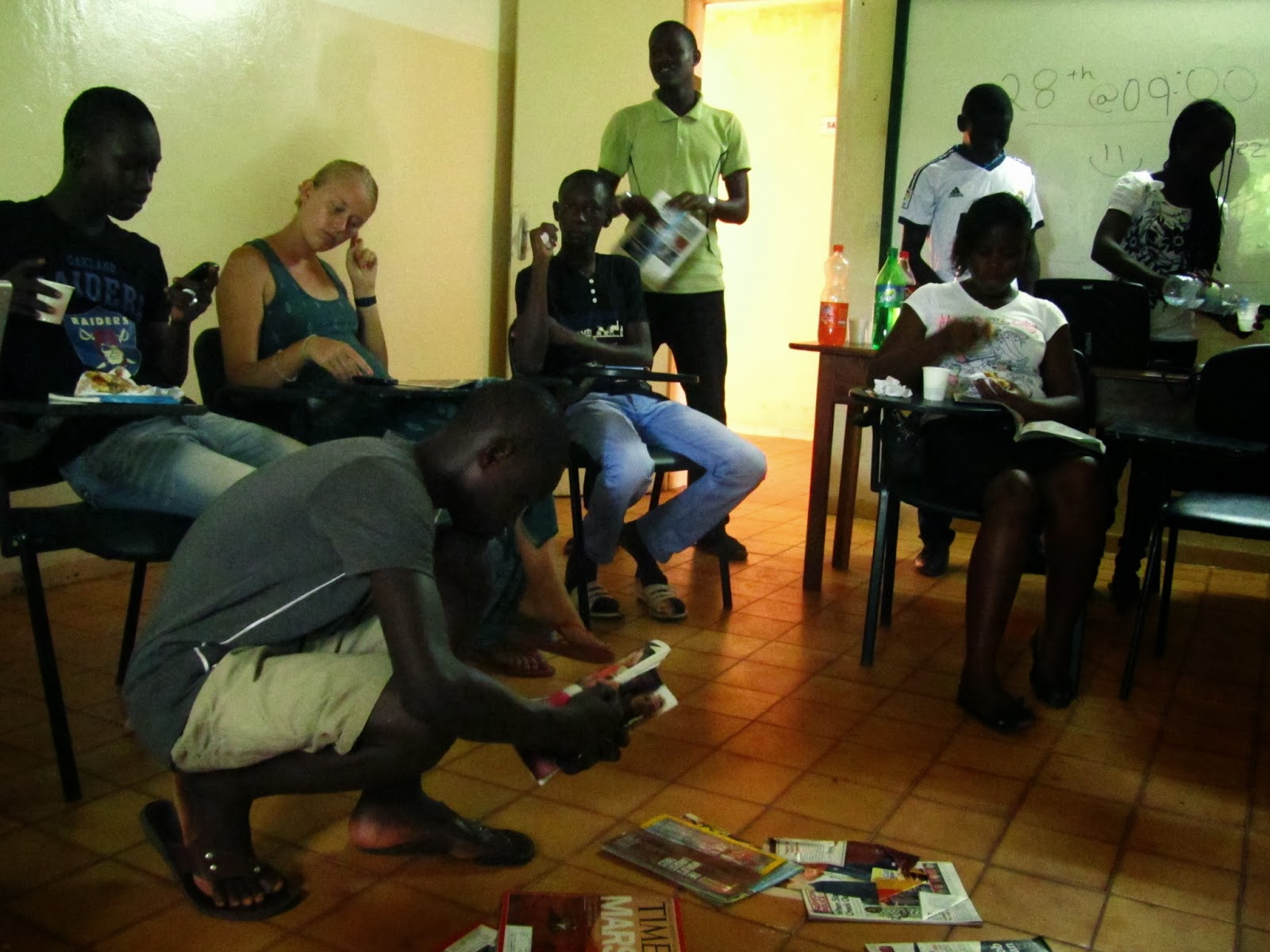
We began the program with an orientation for the students, allowing us to get to know each other, lay out the groundwork of the program and explain what exactly we hoped they would get out of it. It started out rocky enough. First off, we made the mistake of only informing the winners, and neglected to tell the other applicants that they need not show up. This meant that on the day of orientation over 30 students arrived, ready to start work. We had to painfully tell the remaining students to go home, one of which cried and said that they changed their whole summer for this. Opps.

One of our brightest student turned out to not be in High School at all, in fact his older brother (whose name is the same, El Hadji Abdoulaye) is the one that applied but when we called informing his father that he won, the father mistook which El Hadji we were referring too. Sooo the younger boy showed up, spoke amazing English and we decided to let him stay. And we were not disappointed.


Otherwise, the program went very well. We had a mix of offices, some of which have been wonderful and have brought the students along on causeries, baby weighings, water pump instillation, etc... They have taught the kids how to use a photocopier, a computer and how to file documents. But then there are other offices that have received very little guidance. From these kids I was expecting to hear resentful statements and lots of critics. But overall, their main complaint is that all the bosses are always on vacation. 

It is amazing how much we Americans complain about our bosses and disorganization of offices. First off, there is no such thing as a full work week here. Everyone leaves early, does not work past noon on Fridays, and take 2 hour lunch breaks. The most frustrating is that the people in charge are never in the office. Like, maybe one day a week. Pathetic. Most offices are dominated by men that are extremely sexist. The first man I met at the Ministry of Justice said to me, "Madame or Mademoiselle? Can you take me as your Senegalese husband?" And then did not cease to stare at my chest while I was explaining the program. Needless to say we did not place an intern there. 
I will not even go into detail at how difficult it is trying to work when the electricity goes off all the time, internet is shitty, and people spend half the time having to photo copy, fax, and mail every document to Dakar. Talk about tedious.

Aside from getting better insight into the work world of Senegal, the students were so wonderful to get to know. At a closing ceremony, all of the students gave a speech discussing what they learned, how to improve their offices and Senegal in the future. After they all expressed their deep gratitude for the opportunity and have kept in touch with me since.   

For all of them, this was the first time they worked in an office, interacted as a professional and gave a presentation. For several it was the first time they used a computer, photocopier and printer. It was great to give them this opportunity and I look forward to hearing what these wonderful students do in the future! 

Saturday, August 31, 2013

Proverbs

Life in my village becomes boring when I have the same questions, play the same games and eat the same food every day. So I try to mix it up by having specific questions that I ask everyone each week, to learn more about the culture, gender differences and to keep my brain stimulated. Some of these themes have consisted of heaven and hell, Djinn, people that transform into animals, and proverbs! So today, I am giving you a list of some of the proverbs I learn. Some of them I decided to explain, some I just translated.

Kilaalay se moxo esingo la sumea bari a me ijuso la sumea.

Asking cools peoples legs but it does not cool the heart.

-A common occurrence in Senegal is for older people to send children on errands to the boutik to buy things like tea, salt, an onion or a pack of cigarettes. This proverb is saying that running these errands may tire your legs but it is good for your heart.

Meenimeenoo xa samo wuli

Small ant births an elephant.

-The example men used for this was that Obama’s mother did not know she was having a world leader when she had him.

Kendo boo ta fureto, fureboota kendo to.

Health comes out of a corpse, a corpse comes out of health.

Keebaa sigiring se dula doo jee, dinding looring me a jee.

Old person sitting sees a place, child standing does not see.

Atu! Basso le mu

Stop! Is the medicine

Feetoto wo le doney a xa dii kungo tooti.

Giving to a person without clothing is sweeter than a hungry person.

-When someone comes to your home without clothing, you give them clothing once and it is over. When someone comes hungry you feed them but they get hungry again and again. Therefore, it is better to have little clothing but money for food rather than have nice clothing but no money for food.

View from my back yard
Nii ma kee sisee koto, I se taxa kee woolo koto.

When you don’t put it in the chicken, you go and put it in the field.

-Basically, if you have money and you don’t buy one thing than you will use it to buy something else.

Fendo xa bung jail soma a mang bono la sila fando sii.

(This direct translation is funky so I will just explain it).

A griot comes to your home, asks for money and you do not give it. Than you put the money in your pocket, your pocket has a hole and you lose the money.

The last 3 proverbs are all money related and really emphasize an aspect of the culture that makes it very hard to relate and fully integrate in the culture. If you have money here, you are expected to spend it, either by buying others things, giving loans to family and friends that you dont except to be paid back, or purchasing items for yourself. Saving money is not culturally acceptable when other members of your family could use the funds themselves.

Which brings me to the last proverb that is translatable into every Senegalese language here:

Yiri calo be sigiring giyoto, me wo me kee bamboo ti.

A tree branch, no matter how long it sits in the water will not become an alligator.


So don’t worry mom, Im coming home because I can never become an alligator.

Another good thing about rainy season- beautiful skies 

Friday, August 16, 2013

The fun of the fast.

Last year I remember Ramadan being unpleasant, frustrating and hungry. People fought, pregnant and breast feeding mothers fasted, and the sick fasted. Kids were hit harder, women fought more and people fainted from exhaustion. I fasted for 2 days and than gave up. My other experiences with fasting on Yom Kippur was always painful; I remember being very hungry and spending the day at temple where everyone is trying to hide how bad their breath is, debating whether or not brushing your teeth is breaking the fast.
This year was different.
I fasted for...(drum roll please) TWENTY DAYS and learned the ultimate Ramadan secret- fasting can be fun.  For most of the people in my village it is more of a game than a period of religious reflection. When you look beyond the hunger, the health issues and the exhaustion, you realize that it is the one month out of the year where your boring routine is completely changed. And for these villagers who go through the same cycle, day after day, year after year since the day they were born, this tradition is warmly welcomed because it is a reason to do things differently for a little while.

Of course there are complaints, but its something to talk about other than how hot it is! It is a game of strength, bragging about how many days you have fasted for. Young boys try to prove their manliness by fasting as many days possible. Older men boast that this is the 15th year that they will have successfully fasted for everyday. Some chose to fast for an extra week after Ramadan is over, just to solidify their strength.

For me, this year was much more pleasant because I was part of the conversation. I bragged to everyone who asked and teased kids when I surpassed them in the number of days fasted. It was refreshing participating in the tradition and they were so proud that their 'toubab' or 'white person' had joined in.

The most meaningful event was the night of Kiitimo, when everyone is supposed to go to the mosque and pray until call to prayer the next morning at 5 am. While this was not exactly how it played out, it was a very insightful evening as it was my first trip to the mosque.

The intensity of my village's religious beliefs was always something that I felt built a wall between me and them. I have felt uncomfortable disturbing people while on their prayer mat, in case I was interrupting their prayer. I felt uneasy when people asked me to pray with them. I would always decline and explain that I was going to my room to pray and mutter the shema, demonstrating my 'words from Allah'.
 
But on the evening of Kiitimo this barrier was broken as I realized that in practice, there are many similarities between the Islam that is practiced in my village and the way that I have practiced Judaism. 

The day began as a 'Senegalese Halloween'. Kids walked around with an assortment of containers to people's huts and asking for sweets. Some women worked all day pounding beans, corn and sugar into a sweet like dough. Men passed out biskets and candy. I decided to join the fun and brought out a handful of cheap mints. After being attacked by 20 children and I decided against passing out more.

After breaking fast with 'mono', a corn sugar porridge, I ventured out with young girls to the mosque, proudly carrying my mat. We were late and so we were rushing with the other stragglers along the sand paths to the mosque. Like the last guy that forgets his yamika in shul, I forgot a headscarf and there was frantic search for an extra to drape over my brow. 

I took a place next to the young girls in the back of the women's session, in the dirt outside of the mosque. I felt like I was part of the cool kids group that hangs out in the back of any church or temple I have attended. As I adjusted my mat, all the men slowly filtered inside of the mosque while the women waited and bowed to the oldest, most respected men, reiterating the male dominated nature of Senegalese society.

Eventually the praying began. I awkwardly used my peripheral vision to spy on my neighbor, making sure I was correctly following the motions. My group of girls burst into giggles watching me. Like an annoyed Bubbe at temple, a grandmother in front of us sharply turned her head and gave us an angry glance that said all. The peanut gallery next to me tried to stifle their laughter.

After a few rounds of bowing down, kneeling, yoga-esque childs pose, and back to standing, I was enjoying the cathardic motion. I had been concerned that I would be unwelcome because I could not repeat the Arabic prayers but I realized very few were making attempts at saying the words. Like me at my Bat Mitzvah, reciting the haftarah from memory and not from understanding, they have no idea what they are saying.

The praying went on for over a dozen rounds and afterwards we were able to relax. I stretched out my legs and sat up straight, trying to pay close attention to the Imam who began to say prayers and a sermon in Jaxanke. I was taking serious mental notes- make sure to fast next year, help more villagers in school so they can go to France, give money to our mosque, etc... I soon realized I was the only one in my section even paying attention. The rest of the girls were laying down, heads rested on each other's stomachs discussing what was for dinner or gossiping about the men.

Several elderly men were given the opportunity to speak and they proudly preached on the importance of fasting, praying and giving money to the mosque. The ones with a few extra coins demonstrated their generosity by showing us the money and announcing how much they were giving before handing it to the Imam.

By 10:30 pm I was quite hungry and very glad to be given the cue that the service was over. Similar to my reaction after a long morning at temple, I eagerly stood up, wished my neighbors a healthy year and swiftly walked away to be first in line for the oneg- or rather my dinner of oily rice.

El hadji, Gnima and myself on Korite, ready to go great the village


Allah mu xi sun diyala le. Allah mu san diyala le. Allah mu moxo jarra la.

May your fast be sweet.

May Allah bring you a sweet year.

May Allah heal the people.

Wednesday, August 14, 2013

Hair!!!

The highlight of Korite, or the celebratory day after the month of Ramadan, is the prep. The girls go all out. If their parents have money they buy new outfits, new shoes, makeup, and fancy hair ties. But more likely than not, their parents dont have the funds to purchase those extravagant accessories and so they put all their card on the most important show- hair.
For days before, little girls rush around, getting their hair done by the pros. They fight back tears as the women quickly pull these tiny little braids into masterpieces. The final touch- the burning. They take pieces of cloth and light it on fire, then slightly burn the top of the hair to make it 'tighter'. I failed at trying to convince them that it is just damaging their hair.


Some kids buy hair extensions and do fancy dos like this-
Others buy those cheap plastic pieces and tie them on to the ends like Gundo's hair here. This picture is taken of Gundo getting make up done and all the other girls eager watching, fighting over whose turn it is next.


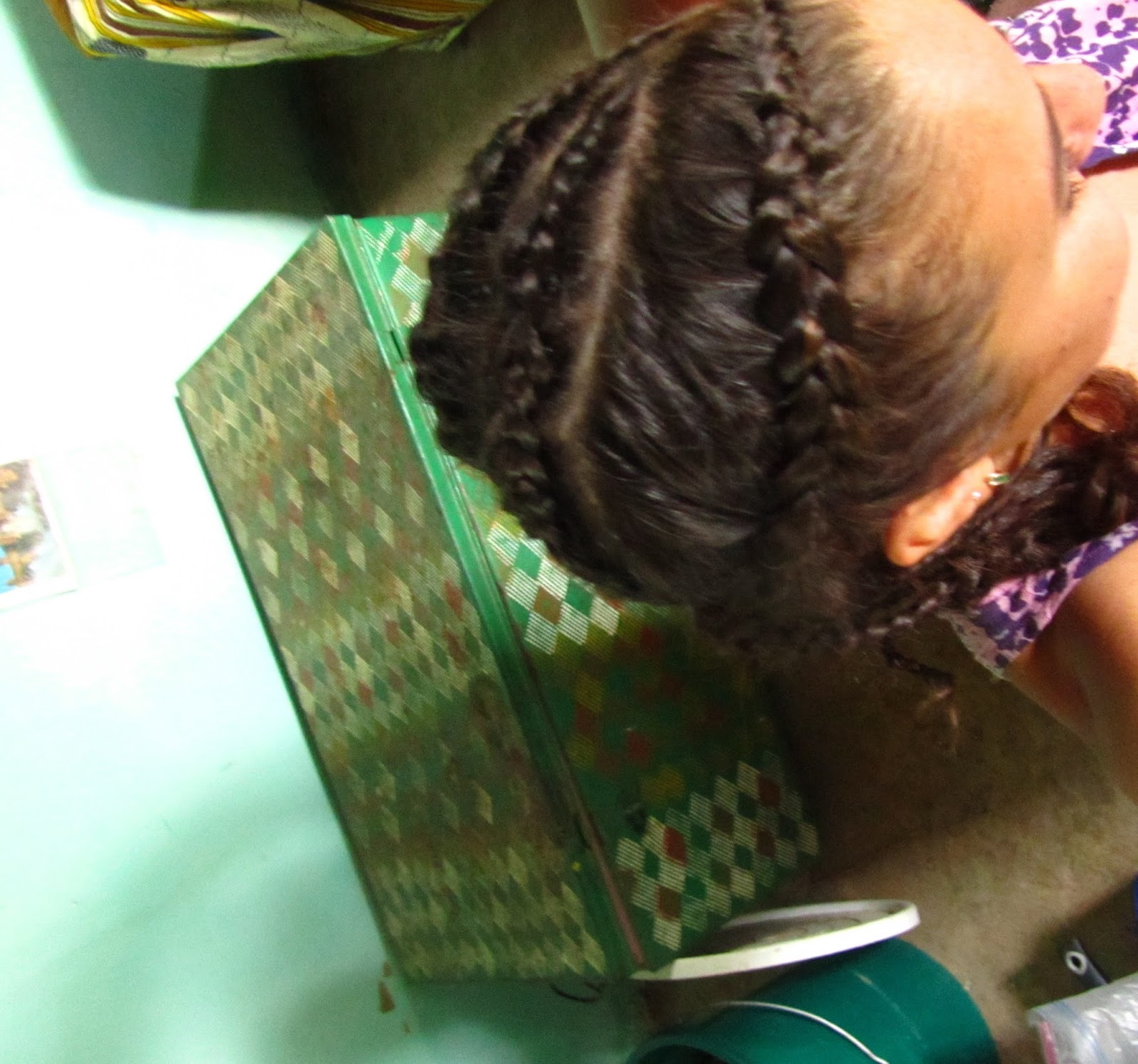
And of course I could not miss out on the fun so while I was buying veggies for my family the lady insisted on doing my hair so I gave in. And she did a good job!

Here I am on the day, decked out in my complete with my ladies.


Thursday, June 27, 2013

Time is ticking!


I survived! I made it through another hot season. There were days where I could not summon the energy to move off of my floor (bed was too hot, floor is cement and thus a little cooler) between the hours of 2-5 pm. Try living in 115 degree heat without your fancy fans or air conditioned car. Surprisingly, there are a few positives to hot season-
-shower 4 times a day and no one judges
-No one does anything or expects to do anything between the hours of 2-5pm
-excellent detox for my sweat glands
-I wore shorts knee length in my compound and no one cared
-Mangos!!!
-Hippos are back!
-Bragging/bitching rights
-And that its over!!! 

So ya, the rains have come! Hooray! While it is still damn hot, the temp has decreased some and has been replaced with humidity. Some times slightly better.

I have been at my site for over one year and am seeing things happen again, the exact way they rolled out last year. More and more I realize how much I missed last year and how much more I understand now. 

The first rains have come, signaling the men to first rush to the fields. I understand who works on what crops. I know what all of the things people build are for, and why it is necessary to create huts just for peanuts. I am aware that women with older daughters plant more than one plot of peanuts while women without older girls do not. I realize that my father, the old, crazy chief that rarely moves from his chair, still has crops of cotton, corn and peanuts because others plant it for him out of respect.

Aminata has grown so much since I arrived, she now walks and is beginning to talk!
What has affected me the most is how hungry the women are after working in the fields from 8 am til 2pm. Since December, people were not working in the fields and I had forgotten how much food these women could eat. Now that they are back in the fields, their aggression at the field bowl increases. Additionally, Ramadan is around the corner meaning that people are trying to save their money because Ramadan is expensive. Therefore we have run out of rice and are only eating corn couscous. 
With that said, Ramadan is coming as is malaria and with these two events, I have my work put out for me. I have just attended a 10 day

intensive 'Malaria Boot Camp' that is put on by Peace Corps and includes PCVs from all over Africa. During my Boot Camp, there were over 30 volunteers from 16 different countries. I was able to collect lots of ideas and information on projects I will do over the next few months, working on encouraging everyone in my community to sleep under a net. With malaria work, talking to pregnant and breastfeeding women about not fasting during Ramadan, and an internship program that I am starting in Tambacounda, I have a busy few months ahead. Before I know it, I will have 3 months left in Senegal and will be planning my next adventure!


Kid playing on the chief''s brand new moto that he received from the government for being chief... He now uses it to travel 20 meters away from the compound.